

21 words to know
0 of 21 openedTap a word to see what it means and where it comes in the song.
-
pasooriपसूड़ी
پسوڑی
Trouble, a mess you keep going back and forth over. Dictionaries spell it bhasoorhi.
In the songThe title: the trouble of coming and going. Around 0:08 in the video.
Read this part ↓ -
aan jaanआण जाण
آݨ جاݨ
Coming and going.
In the songThe to-and-fro that is the trouble. Around 0:08 in the video.
Read this part ↓ -
aggअग्ग
اگ
Fire. Punjabi for the Hindi aag.
In the songWhat he wants to set to his constraints. Around 0:05 in the video.
Read this part ↓ -
majbooriमजबूरी
مجبوری
Helplessness, the constraints that tie your hands.
In the songHe wants to burn it; in her verse she has forgotten it. Around 0:05 in the video.
Read this part ↓ -
zeharज़हर
زہر
Poison.
In the songEven if it turns to poison, he will take all of it. Around 0:10 in the video.
Read this part ↓ -
kaagaकागा
کاگا
Crow. In folk songs its caw means someone you wait for is coming.
In the songThe bird he asks for news. Around 0:21 in the video.
Read this part ↓ -
chooriचूरी
چوری
Crumbled roti mixed with ghee and sugar.
In the songHis reward to the crow for the news. Around 0:23 in the video.
Read this part ↓ -
raah, baanhराह, बाँह
راہ، بانہہ
Path and arm.
In the songWhere he would hide the one he loves. Around 0:26 in the video.
Read this part ↓ -
dholढोल
ڈھول
Beloved. Also the drum, but in folk song a tender name for the one you love.
In the songHow the chorus calls the beloved. Around 0:31 in the video.
Read this part ↓ -
judaiyaanजुदाइयाँ
جدائیاں
Separations; the singular is judaai.
In the songWhat the beloved cannot know about. Around 0:31 in the video.
Read this part ↓ -
dastoorदस्तूर
دستور
Custom, the way things are done.
In the songThe world's rules she forgets. Around 0:57 in the video.
Read this part ↓ -
batheraबथेरा
بتھیرا
Plenty, more than enough.
In the songBeing with the beloved is enough. Around 1:00 in the video.
Read this part ↓ -
khwahishaatख़्वाहिशात
خواہشات
Wishes, desires; the plural of khwahish.
In the songThe heart's wishes she asks the beloved to hold up. Around 1:10 in the video.
Read this part ↓ -
adhooriअधूरी
ادھوری
Unfinished, incomplete.
In the songThose wishes are still unfinished. Around 1:13 in the video.
Read this part ↓ -
vaari jaavaanवारी जावाँ
واری جاواں
I would give myself for you. A Punjabi phrase of devotion.
In the songHow she calls the beloved. Around 1:15 in the video.
Read this part ↓ -
sardaariसरदारी
سرداری
Rule, the upper hand.
In the songMay separation never have it. Around 1:52 in the video.
Read this part ↓ -
dildaarदिलदार
دلدار
Beloved, the one who holds your heart.
In the songLovers, named with friends (yaar). Around 2:18 in the video.
Read this part ↓ -
aazaariआज़ारी
آزاری
Suffering, torment.
In the songMay no lover or friend have to know it. Around 2:18 in the video.
Read this part ↓ -
silsileसिलसिले
سلسلے
Ties, threads of connection; the singular is silsila.
In the songWhere she offers to take the beloved. Around 2:34 in the video.
Read this part ↓ -
kamiकमी
کمی
Absence, a lack.
In the songThe beloved's absence is still felt. Around 2:38 in the video.
Read this part ↓ -
panaahपनाह
پناہ
Shelter, refuge.
In the songWhat she asks the beloved to give. Around 2:44 in the video.
Read this part ↓
Pasoori is a Punjabi and Urdu love song sung by Ali Sethi and Shae Gill for Coke Studio Pakistan Season 14. Ali Sethi composed it with the season's producer, Xulfi, and the official video came out on 7 February 2022. In September 2026 it became the first Pakistani song to pass one billion views on YouTube.
This guide explains the title, the Punjabi and Urdu words worth knowing before you listen, and what the song says from start to finish. It does not reprint the lyrics. Each word card says roughly where to hear it in the official video.
Want the full English translation? The credits of the official video name Ali Sethi himself as the song's translator. Play it on YouTube and turn on captions (CC), then choose English.
What “pasoori” means
Pasoori is Punjabi for trouble: a mess, a bind, the kind of problem that keeps you going back and forth without a way out. In Urdu the closest word is kashmakash, a dilemma. Coke Studio spells the title as it sounds. Punjabi dictionaries spell the word bhasoorhi (بھسوڑی), and that is the spelling you will find in most Punjabi lyric sheets.
In the song the trouble has a shape. It is the aan jaan, the coming and going, of a love that cannot stay in one place. The title line puts the two together:
Aan jaan di pasoori nu
Word for word: aan coming, jaan going, di of, pasoori the trouble, nu to it. In plain English: “the trouble of coming and going”.
Set fire to it
The song opens with a wish to burn. Ali Sethi sings of putting agg, fire, to majboori: helplessness, the constraints that tie a person's hands. The image came from the road. Sethi has said the idea started with a slogan painted on the back of a truck, which roughly meant “set fire to your problems”, and he built the song's first lines around it.
Then he goes further. Whatever the beloved gives him, he says, he will take all of it, even if it turns to zehar, poison. It is the kind of all-or-nothing promise Punjabi love songs have always made.
The crow and the sweet
The one he waits for was supposed to come and did not, and his heart pounds and crashes against itself. So he turns to an old village sign. In Punjabi folk songs a kaaga, a crow, cawing near the house means that someone you are waiting for is on the way. He promises the crow choori, crumbled roti rich with ghee and sugar, if it brings the news.
If the beloved does come, he would hide them in the raah, the paths, and in his baanh, his arms, and let nobody stop him.
My dhol, and the separations
The chorus calls the beloved dhol. The word also means the drum, but in Punjabi folk song it is a tender name for the one you love. He asks how his dhol could ever know what the judaiyaan, the separations, feel like from his side.
Near the end, over a long instrumental stretch, the chorus turns into a blessing. He prays that separation never gets the sardaari, the upper hand, and that no dildaar, no lover, and no friend, ever has to know such aazaari, such suffering.
Shae Gill's answer
Shae Gill's verse (about 0:55) answers his. Where he wanted to burn his majboori, she says she has simply forgotten it, along with the world's dastoor, its customs and rules. Being with the beloved is bathera, more than enough.
She asks the beloved to hold up the heart's khwahishaat, its wishes, which are still adhoori, unfinished. Then she calls them with one of the warmest phrases in Punjabi, vaari jaavaan: I would give my whole self for you.
The Urdu bridge
Late in the song (about 2:29) Shae Gill switches from Punjabi to Urdu, and the music opens up. She offers to take the beloved to where the silsile are, the ties and threads that connect people. The beloved is still the same person, she sings, and their kami, their absence, is still felt. The bridge ends with a request for panaah, shelter, before the song returns to the fire of its opening lines.
Watch Pasoori
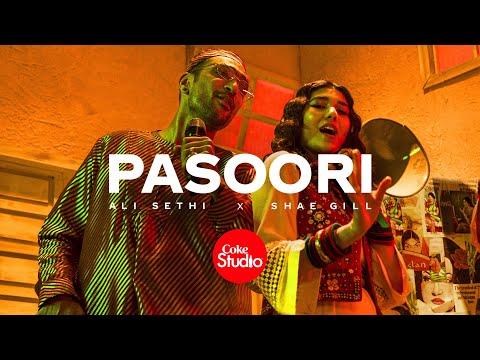 Coke Studio Season 14: Pasoori, Ali Sethi x Shae Gill
The official video is on the Coke Studio Pakistan YouTube channel. Turn on captions for Ali Sethi's own English translation.
A love song about a border
Read on its own, Pasoori is about lovers kept apart. Sethi has said where that came from. He had been invited to work on a project in Mumbai and was told that a Pakistani artist could not work in India. He could not travel, he said, but his music could cross the border in his place.
He has called the song “a flower bomb hurled at nationalism”, and he drew on the Punjabi folk songs he grew up with, the ones that sing about lovers, crows, messages and roads. When the song took off, he said he was astounded by how many people in India took it to heart. In 2023 it was remade in Hindi as Pasoori Nu for the film Satyaprem Ki Katha, sung by Arijit Singh and Tulsi Kumar, with Ali Sethi credited alongside composer Rochak Kohli.
Who made Pasoori
The official video credits the song to Ali Sethi and Fazal Abbas as writers, with Ali Sethi and Xulfi as composers. Ali Sethi also wrote the song's narrative. Abdullah Siddiqui and Sherry Khattak arranged the music, Abdullah Siddiqui and Xulfi produced it, and Xulfi mixed it. Xulfi curated and produced the whole of Coke Studio Season 14. Kamal Khan directed the video, and the classical dancer Sheema Kermani appears in it.
Shae Gill, born Anushae Gill, was an economics student when the song was made. Her best friend had shared videos of her singing on Instagram, and Xulfi heard them and asked her to join the season. Pasoori was her first Coke Studio song.
The song became one of the most-searched songs on Google in 2022 and the most-streamed Pakistani song on Spotify. In April 2023 Ali Sethi sang it at the Coachella festival in California. For where it sits among the show's best work, see our 20 best Coke Studio songs of all time. For another Coke Studio song explained word by word, see Arz Kiya Hai meaning.
Frequently asked questions
What does “pasoori” mean in English?
It is Punjabi for trouble or a mess, the kind you keep going back and forth over. In the song it is “the trouble of coming and going”: a love that cannot stay put.
Who sang Pasoori?
Ali Sethi and Shae Gill sang it for Coke Studio Pakistan Season 14. Ali Sethi composed it with Xulfi and wrote it with Fazal Abbas.
What language is Pasoori in?
Mostly Punjabi, with a short Urdu section sung by Shae Gill near the end.
Is there an English translation of Pasoori?
Yes. The official video on YouTube has English subtitles, and its credits name Ali Sethi as the translator; turn on captions and choose English. This page explains the song and its words rather than reprinting a translation.
When was Pasoori released?
The official video was published on 7 February 2022, in the second episode of Coke Studio Pakistan Season 14.
Is Pasoori Nu the same song?
No. Pasoori Nu is a 2023 Hindi remake for the film Satyaprem Ki Katha, sung by Arijit Singh and Tulsi Kumar. The original is the Coke Studio version by Ali Sethi and Shae Gill.
Sources: the credits on the official video (Coke Studio Pakistan, 7 February 2022); word spellings cross-checked against a timed lyrics source and by ear; the Punjabi spelling note follows Wikipedia, which cites the Punjabi University Patiala dictionary; ThePrint, 7 September 2026; Al Jazeera (AFP), 18 April 2023; DailyO, 26 June 2023.
Written by
Vishal Dudhal