

25 words to know
0 of 25 openedTap a word to see what it means and where it comes in the song.
-
arz kiya haiअर्ज़ किया है
عرض کیا ہے
I present this. The phrase a poet says before reciting a couplet.
In the songThe title, sung right after the Faiz line. Around 1:00 in the video.
Read this part ↓ -
kaayarकायर
کایر
Coward, someone timid.
In the songWhat the new lovers were before love made them poets. Around 0:40 in the video.
Read this part ↓ -
aashiqआशिक़
عاشق
Lover, someone in love.
In the songThe new lovers the song opens with. Around 0:40 in the video.
Read this part ↓ -
shaayarशायर
شاعر
Poet. Someone who writes shayari, Urdu verse.
In the songWhat love turns a timid person into. Around 0:40 in the video.
Read this part ↓ -
lafzलफ़्ज़
لفظ
Word. The plural is alfaaz.
In the songFirst the lovers hunt for words; later he fears every word is used up. Around 0:49 in the video.
Read this part ↓ -
ishqइश्क़
عشق
Love, the deep and consuming kind. Stronger than the everyday pyaar.
In the songThe love that makes him feel like a great poet. Around 0:59 in the video.
Read this part ↓ -
Faizफ़ैज़
فیض
Faiz Ahmad Faiz (1911 to 1984), one of the best-loved Urdu poets.
In the songThe poet he claims, proudly, to have become. Around 0:59 in the video.
Read this part ↓ -
baagबाग़
باغ
Garden, or orchard.
In the songThe garden of his heart, where the rose grows. Around 1:10 in the video.
Read this part ↓ - gulaabगुलाब
-
ghulaamग़ुलाम
غلام
Servant, or slave. Here, someone utterly devoted.
In the songHow he describes himself, right after the rose. Around 1:29 in the video.
Read this part ↓ -
baadshahबादशाह
بادشاہ
King, emperor.
In the songWhat he could become in their heart, if they wanted. Around 1:39 in the video.
Read this part ↓ -
naavनाव
ناؤ
Boat.
In the songHe cannot be a boat for anyone while he is sinking himself. Around 1:48 in the video.
Read this part ↓ -
toofaanतूफ़ान
طوفان
Storm.
In the songThe storms he sees no point in fighting. Around 1:58 in the video.
Read this part ↓ -
fitratफ़ितरत
فطرت
Nature, a person's born temperament.
In the songDrowning, he says, is in a poet's nature. Around 1:58 in the video.
Read this part ↓ -
lakeerलकीर
لکیر
Line; haath ki lakeerein are the lines on a palm.
In the songSung as lakeeron: the palm lines that keep whispering. Around 2:27 in the video.
Read this part ↓ -
Mirza, Mirमिर्ज़ा, मीर
مرزا، میر
Mirza Ghalib (1797 to 1869) and Mir Taqi Mir (1723 to 1810), the classical masters of Urdu poetry.
In the songThe poets he admits he is not. Around 3:34 in the video.
Read this part ↓ -
maahirमाहिर
ماہر
Expert, a master of a craft.
In the songHe is no maahir, and says so. Around 3:44 in the video.
Read this part ↓ -
zaahirज़ाहिर
ظاہر
Obvious, plain to see.
In the songThat he is no master is plain to see. Around 3:44 in the video.
Read this part ↓ -
mehfilमहफ़िल
محفل
A gathering, often for music or poetry.
In the songShould they stay at the gathering or get up and run? Around 4:19 in the video.
Read this part ↓ -
tareefतारीफ़
تعریف
Praise, admiration.
In the songSung as tareefon: the praise he looks for in their eyes. Around 4:33 in the video.
Read this part ↓ -
veeraanवीरान
ویران
Deserted, empty and desolate.
In the songHow his mehfil feels without them. Around 4:33 in the video.
Read this part ↓
Words from the mushaira Not sung, but they explain the title
-
mushairaमुशायरा
مشاعرہ
A poetry gathering where Urdu poets recite to a live audience.
Around the songNot sung, but it is where the title phrase comes from.
Read this part ↓ -
irshaadइरशाद
ارشاد
Please, go on. The audience's reply to arz kiya hai.
Around the songNot sung; the answer the title phrase waits for.
Read this part ↓ -
wah wahवाह वाह
واہ واہ
Bravo! What a mushaira audience calls out after a good line.
Around the songNot sung; the praise every poet hopes for.
Read this part ↓ -
sherशेर
شعر
A couplet, two lines of Urdu verse that stand on their own.
Around the songNot sung; what a poet recites after arz kiya hai.
Read this part ↓
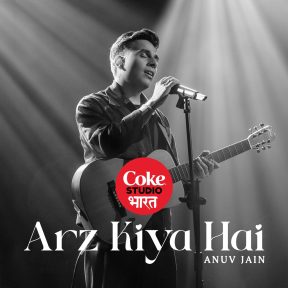
Arz Kiya Hai is a Hindi-Urdu love song written, composed and sung by Anuv Jain and produced by the duo Lost Stories for Coke Studio Bharat Season 3. The official video came out on 19 August 2025. The title is a phrase from the Urdu poetry gathering, the mushaira, and the whole song plays with that world: a nervous young man in love decides he has become a poet, and asks to be heard.
This guide explains the title, the Urdu and Hindi words worth knowing before you listen, and what the song says from start to finish. It does not reprint the lyrics. Each word card says roughly where to hear it in the official video.
Want the full English translation? Coke Studio added its own English subtitles to the official video. Play it on YouTube and turn on captions (CC), then choose English.
What “arz kiya hai” means
Arz is a polite Urdu word for a request or a humble submission, and kiya hai means “has been made”. Put together, arz kiya hai means roughly “I present this” or “here is what I have to offer”.
It is a set phrase from the mushaira, the gathering where Urdu poets recite their work to a live audience. Before a couplet, the poet says arz kiya hai to ask for the room's attention. The audience answers irshaad, “please, go on”, and the poet recites a sher, a couplet. A good line is met with cries of wah wah. The phrase is so familiar in India and Pakistan that people use it as a joke before saying anything grand.
That is the joke and the tenderness of the song's title. The speaker is not a poet on a stage. He is an ordinary young man who wants to say something important to one person, and he borrows the poet's formal opening to do it.
Love turns him into a poet
The song opens with a small observation about new lovers. The aashiq, the lovers, who were once kaayar, timid cowards, suddenly turn into shaayar, poets, and spend their time hunting for the right lafz, the right words. They do not know what love expects of them, so they try verse.
Anuv Jain told Rolling Stone India that this is the point of the song. The speaker admits he is no expert. He is an ordinary person who fell in love and turned into a poet because of it, and the song is partly a gentle joke at his expense.
“I have become Faiz”
The hook is a proud, slightly ridiculous claim. In his ishq, his love for this person, the speaker says he has become Faiz. Then he asks to present what he has written for them.
Ishq mein tere hain Faiz bane
Word for word: ishq love, mein in, tere your, hain … bane have become, Faiz Faiz. In plain English: “In your love, I have become Faiz.”
Faiz Ahmad Faiz (1911 to 1984) is one of the best-loved Urdu poets of the twentieth century, known for poems that join romantic longing with politics. Comparing yourself to Faiz because you wrote a few lines for someone is a big claim, and the song knows it.
The rose and the servant
In the first verse he says that in the baag, the garden, of his heart, the person he loves feels like a gulaab, a rose, blooming in the air all around him.
Then he describes himself as their ghulaam, a servant devoted to them. In the same breath he adds that, if they wanted, he could be the baadshah, the king, of their heart instead. The two words, gulaab and ghulaam, sound alike and arrive close together, so the rose and the servant feel like a matched pair.
Drowning is a poet's fate
The next lines use one of the oldest images in Urdu love poetry: drowning in the beloved's eyes. He asks how he could ever be a naav, a boat, for others when he himself is sinking, helpless, in the endless sea of their eyes. Fighting the toofaan, the storm, is pointless, he decides, because drowning is in a poet's fitrat, his very nature.
The second verse (about 2:18) is quieter and more physical. Their hands hold his shaking hands, and the lakeeron, the lines on their palms, seem to keep whispering until sleep comes.
Nothing new left to say
After a long musical break, the mood turns. He wonders what is left for any lafz, any word, to claim, since the world has already said everything there is to say about love.
Then comes the confession at the heart of the song. He is neither Mirza nor Mir, the two great classical poets of Urdu. He is no maahir, no expert, and that much is zaahir, plain to see. He is not telling the world anything it did not know. All he has written is his own life, and that much is true. After the boast about Faiz in the chorus, this is the self-mocking side Jain spoke about: an amateur who knows exactly how he compares with the greats, and writes anyway.
A poet for one person
In the closing section the speaker reads out whatever his heart has to say, and finds that his eyes are reading theirs. He asks whether they should stay seated at the mehfil, the gathering, or get up and run away together. He looks for tareef, praise, in their eyes, and says his mehfil feels veeraan, deserted, without them.
The last lines settle the question the song began with. He became a poet, and these serenades are for them alone. The grand mushaira opening was only ever meant for an audience of one.
Watch Arz Kiya Hai
 Anuv Jain X Lost Stories: Arz Kiya Hai (Official Video), Coke Studio Bharat
The official video is on the Coke Studio India YouTube channel. Turn on captions for the channel's own English translation.
Who made Arz Kiya Hai
Anuv Jain wrote, composed and sang the song. It was produced by Lost Stories, and Rishab Joshi of Lost Stories mixed it with Mukul Jain, who also mastered it. Sarthak Kalyani is credited with additional production and additional vocals. Rolling Stone India names him as the singer of the sargam, the sung notes in the middle of the song. Keba Jeremiah played the acoustic, electric and bass guitars and the charango, Lalit Sisodiya played harmonium, Angad Bahra played electric guitar and Vivian D'Souza played bass. Solomon Konwar Rengma and Anahita Singh sang backing vocals. Edwin Quadros directed the video.
Jain told Rolling Stone India that he wrote the song in about 20 days and then built it up with Rishab Joshi, a friend. He told Esquire India that the Coke Studio Bharat collaboration reached him as a wedding gift from his manager, and that his mother and twin sister helped with the lyrics.
Coke Studio Bharat released it as the fifth song of Season 3. In July 2026 the song reached No. 1 in India on Spotify. t2 Online reported that it was the first Coke Studio song to do so, and Jain's third Spotify No. 1 in India after Husn and Jo Tum Mere Ho.
Frequently asked questions
What does “arz kiya hai” mean in English?
It means “I present this” or “here is my humble offering”. Urdu poets say it before reciting a couplet, and the audience replies “irshaad”, meaning “please, go on”.
Who sang Arz Kiya Hai?
Anuv Jain sang it, and he also wrote and composed it. Lost Stories produced it for Coke Studio Bharat Season 3, and Sarthak Kalyani sang additional vocals.
Is there an English translation of Arz Kiya Hai?
Yes. Coke Studio added English subtitles to the official video on YouTube; turn on captions and choose English. This page explains the song and its words rather than reprinting a translation.
Which poets does the song mention?
The chorus names Faiz, the twentieth-century poet Faiz Ahmad Faiz. Near the end, the singer says he is neither Mirza nor Mir, meaning Mirza Ghalib (1797 to 1869) and Mir Taqi Mir (1723 to 1810), the two great classical masters of Urdu poetry.
When was Arz Kiya Hai released?
The official video was published on 19 August 2025, as the fifth song of Coke Studio Bharat Season 3.
Is Arz Kiya Hai a sad song?
No. It is a tender, slightly self-mocking love song. The speaker jokes that love has made him a great poet, admits he is nowhere near the masters, and ends by saying every word was written for one person.
Sources: the credits and the English captions on the official video (Coke Studio India, 19 August 2025); word spellings cross-checked on two fan lyrics pages; Rolling Stone India, 26 August 2025; Loudest, 20 August 2025; Esquire India, September 2025; t2 Online, 3 July 2026.
- Anuv Jain
- Lost Stories
- Coke Studio Bharat
- Arz Kiya Hai
- song meaning
- Urdu poetry
- Faiz Ahmad Faiz
- Mirza Ghalib
Written by
Vishal Dudhal