Coke Studio started in Pakistan in 2008 as a television programme where a house band and a few guest artists recorded live in a single room. Eighteen years and fifteen seasons later it has become the most influential music platform in South Asia, with spin-offs in India, Bangladesh and across the region, and a handful of songs that have outgrown the show entirely.
This list ranks the twenty performances that matter most. The criteria are simple: the song has to work as a recording, not just as a television moment; it should have reached listeners beyond the show's regular audience; and it should be something people still play years later. We have included the Indian editions, Coke Studio @ MTV and Coke Studio Bharat, because the best of those performances deserve the same shelf.
20. Khalasi, Aditya Gadhvi and Achint (Coke Studio Bharat, 2023)
The song that justified the Indian relaunch. A Gujarati folk-inspired track about a sailor, built on a hypnotic groove, Khalasi became a national hit far outside Gujarat and is now a wedding and garba regular. It showed that an Indian Coke Studio could produce a genuine crossover.
 Khalasi
19. Nindiya Re, Kaavish (Pakistan, Season 4, 2011)
A lullaby sung by Jaffer Zaidi, arranged with a delicacy that was unusual for Coke Studio's heavier early seasons. Nindiya Re is the song that Pakistani parents hum, and it remains one of the most quietly loved performances in the show's history.
 Nindiya Re
18. Husna, Piyush Mishra and Hitesh Sonik (Coke Studio @ MTV, Season 2, 2012)
A letter from a man in post-Partition Lahore to a woman left behind in India. Piyush Mishra wrote it, sings it and acts it, and Hitesh Sonik's arrangement stays out of the way. It is less a song than a short film, and arguably the finest thing the Indian edition produced. We profiled Mishra's broader career in this piece.
 Husna
17. Paar Chanaa De, Shilpa Rao and Noori (Pakistan, Season 9, 2016)
An Indian singer, Shilpa Rao, on a Pakistani stage, singing a Punjabi folk tale about Sohni and Mahiwal with the rock band Noori. The cross-border casting mattered, but the performance earns its place on the strength of Rao's vocal alone.
 Paar Chanaa De
16. Chaap Tilak, Abida Parveen and Rahat Fateh Ali Khan (Pakistan, Season 7, 2014)
Two of the greatest living Sufi voices on Amir Khusrau's 700-year-old poem. Coke Studio's version is restrained, almost reverent, and it brought Khusrau to a generation that knew the words but not the source.
 Chaap Tilak
15. Garaj Baras, Ali Azmat and Rahat Fateh Ali Khan (Pakistan, Season 1, 2008)
The template. Season one's standout paired a rock vocalist with a qawwal, and the collision produced something neither could have made alone. Almost everything the show did later is a variation on this idea.
 Garaj Baras
14. Wohi Khuda Hai, Atif Aslam (Pakistan, Season 12, 2019)
A hamd, a devotional song in praise of God, performed by the biggest pop star in Pakistan with no theatrics and total conviction. Wohi Khuda Hai reset expectations for what Atif Aslam could do on the show after years of lighter material.
 Wohi Khuda Hai
13. Zariya, A. R. Rahman, Ani Choying and Farah Siraj (Coke Studio @ MTV, Season 3, 2013)
A Tibetan Buddhist nun, a Jordanian singer and Rahman, in three languages, on one track. On paper it is a gimmick. In practice it is one of the most moving pieces of music Rahman has released outside film. The Indian edition's high-water mark.
 Zariya
12. Blockbuster, Faris Shafi, Umair Butt and Gharwi Group (Pakistan, Season 15, 2024)
Season 15 swapped the house band for a producer-led model under Zulfiqar Jabbar Khan, and Blockbuster was its wildest result: a Sindhi folk ensemble, a rapper and a big pop chorus in a single, chaotic, joyful song. It showed the format could still surprise.
 Blockbuster
11. Sammi Meri Waar, Umair Jaswal and Quratulain Balouch (Pakistan, Season 8, 2015)
A Punjabi folk song turned into a stadium rock anthem. Umair Jaswal's vocal is enormous, QB's is smoky and controlled, and the arrangement gave Coke Studio its most danced-to track until Pasoori.
 Sammi Meri Waar
10. Madari, Clinton Cerejo, Vishal Dadlani and Sonu Kakkar (Coke Studio @ MTV, Season 2, 2012)
The Indian edition's breakthrough. A song about a puppeteer, driven by Vishal Dadlani's growl and Sonu Kakkar's folk flourishes, with Clinton Cerejo's production tying it together. We reviewed it when it aired, in our Madari review, and it holds up completely.
 Madari
9. Kangna, Fareed Ayaz and Abu Muhammad (Pakistan, Season 4, 2011)
More than ten minutes of qawwali, uncut. Fareed Ayaz and Abu Muhammad are the keepers of the Delhi gharana tradition, and Coke Studio simply let them perform. Kangna is the show's most uncompromising piece of music and one of its most important.
 Kangna
8. Aaj Jaane Ki Zid Na Karo, Farida Khanum (Pakistan, Season 8, 2015)
Farida Khanum was in her eighties when she recorded the ghazal she had made famous half a century earlier. Her voice has thinned, and the performance is more affecting for it. The arrangement, by Strings, is barely there. It is the most fragile and most beautiful recording in the show's catalogue.
 Aaj Jaane Ki Zid Na Karo
7. Charkha Nolakha, Atif Aslam and Qayaas (Pakistan, Season 5, 2012)
Atif Aslam's first great Coke Studio moment. The song moves from a quiet Sufi verse into a full rock arrangement with the band Qayaas, and Aslam's voice rides it without strain. For many listeners this is the definitive version of the modern Coke Studio sound.
 Charkha Nolakha
6. Jhol, Maanu and Annural Khalid (Pakistan, Season 15, 2024)
The newest song in the top ten, and already a standard. Jhol is a slow Punjabi love song with an R&B undertow, sung with a conversational intimacy that felt new for the show. It spread across India and the diaspora through short-form video and ended up in wedding playlists on both sides of the border within months.
 Jhol
5. Tu Jhoom, Abida Parveen and Naseebo Lal (Pakistan, Season 14, 2022)
Season 14's opener, and the song that announced the show's reinvention under Zulfiqar Jabbar Khan. Abida Parveen and Naseebo Lal, two voices from different worlds of Pakistani music, trade verses about letting go. It was released in the middle of the pandemic and landed as consolation.
 Tu Jhoom
4. Alif Allah (Jugni), Arif Lohar and Meesha Shafi (Pakistan, Season 3, 2010)
The song that took Coke Studio from a Pakistani television show to a regional phenomenon. Arif Lohar, with his chimta, and Meesha Shafi, then a model with little singing history, turned a Punjabi folk standard into something that got played at parties in Delhi, Dubai and Toronto. Alif Allah was the first Coke Studio track to go properly viral.
 Alif Allah (Jugni)
3. Tajdar-e-Haram, Atif Aslam (Pakistan, Season 8, 2015)
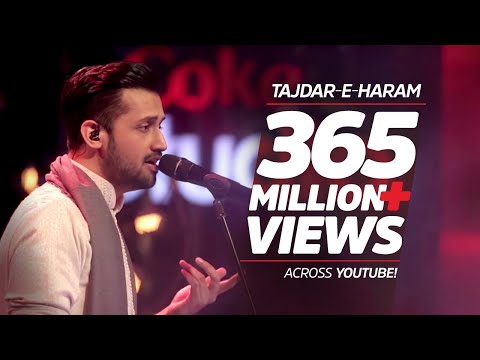
A qawwali made famous by the Sabri Brothers, reinterpreted by a pop singer, and received with almost universal approval by audiences who normally guard that repertoire fiercely. Tajdar-e-Haram became the most viewed Coke Studio video for several years, and it remains the show's definitive devotional performance.
 Tajdar-e-Haram
2. Afreen Afreen, Rahat Fateh Ali Khan and Momina Mustehsan (Pakistan, Season 9, 2016)
A gentle remake of Nusrat Fateh Ali Khan's 1996 original, with Rahat carrying the melody and Momina Mustehsan adding a counter-verse. It was, for a long time, the most streamed song in Coke Studio's history, and it introduced the show to a vast new audience in India. It is also simply a lovely recording, unhurried and warm.
 Afreen Afreen
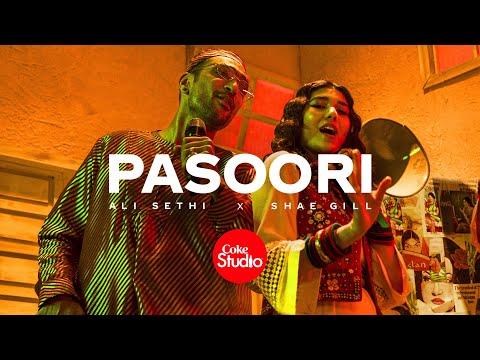
1. Pasoori, Ali Sethi and Shae Gill (Pakistan, Season 14, 2022)
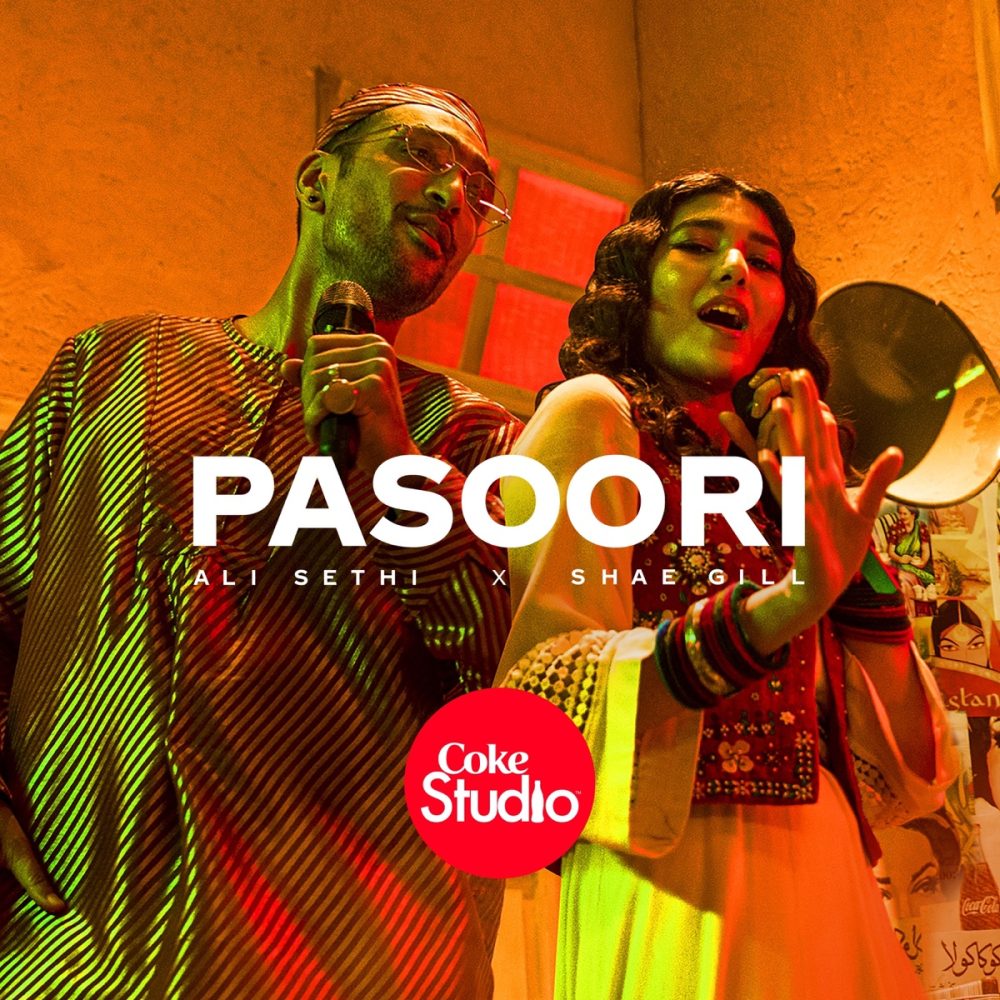
No Coke Studio song has travelled like Pasoori. It became the most searched song in the world on Google in 2022, charted internationally, was covered in dozens of languages and got a Bollywood remake that most listeners rejected in favour of the original. Ali Sethi, a classically trained singer and writer, built it on a Punjabi lyric about forbidden love, and Shae Gill, then almost unknown, delivered the verse that everyone sings. The arrangement borrows from reggaeton and Turkish pop without sounding like either. Pasoori is the moment Coke Studio stopped being a South Asian institution and became a global one.
 Pasoori
What Makes a Coke Studio Song Work
Look at the top ten and a pattern appears. Nearly every song pairs a traditional form, whether qawwali, Punjabi folk or ghazal, with a contemporary arrangement, and nearly every one puts an older or classically trained voice next to a younger pop one. The show's genius has never been fusion for its own sake. It is the staging of a conversation between generations, recorded live, with the mistakes left in.
The Indian edition struggled for years because it treated the format as a variety show rather than a conversation. Its best moments, Madari, Husna and Zariya, succeeded precisely when they followed the Pakistani model. Coke Studio Bharat's relaunch in 2023, with Khalasi as its calling card, suggests the lesson has been learnt. You can browse our full coverage of the Indian seasons in the Coke Studio section.
Frequently Asked Questions
Which is the most popular Coke Studio song ever?
Pasoori, by Ali Sethi and Shae Gill from Season 14, is the most streamed and most searched Coke Studio song worldwide. Before 2022, Afreen Afreen and Tajdar-e-Haram held that position.
Which Coke Studio season is the best?
Season 14 (2022) produced Pasoori and Tu Jhoom and is the consensus pick among newer fans. Older listeners usually argue for Season 8 (2015), which gave the show Tajdar-e-Haram, Aaj Jaane Ki Zid Na Karo and Sammi Meri Waar in a single run.
Is Coke Studio India still running?
The original Coke Studio @ MTV ran from 2011 to 2015. It was relaunched as Coke Studio Bharat in 2023 and has released new seasons since, alongside regional editions such as Coke Studio Tamil.
Who produces Coke Studio Pakistan now?
Zulfiqar Jabbar Khan, known as Xulfi, took over as producer from Season 14 in 2022, replacing the long-running house-band model established by Rohail Hyatt and later Strings.