Ranking A. R. Rahman is a slightly absurd exercise. The man has scored somewhere around 150 films across Tamil, Hindi, Telugu, Malayalam and English, won two Academy Awards and two Grammys, and changed how Indian film music is recorded, mixed and sung. Any list of fifteen leaves out thirty albums that would be career highlights for anyone else.
So here is the rule we used. These are ranked as albums, not as collections of hits. An album earns a high place when it works front to back, when its weakest song would still be another composer's best, and when it changed something about how film music sounded afterwards. Where a film exists in both Tamil and Hindi, we treat it as one album and note the original language.
15. Highway (2014)
Rahman's second collaboration with Imtiaz Ali is quieter than Rockstar and more interesting than it gets credit for. Patakha Guddi, sung by the Nooran Sisters, became the hit, but the album's heart is Maahi Ve and the sparse, almost ambient Kahaan Hoon Main. It is a road-movie soundtrack that actually sounds like a road: long stretches of texture, sudden bursts of folk colour.
 Patakha Guddi
14. Slumdog Millionaire (2008)
The album that gave Rahman his two Oscars sits lower here than its trophy cabinet suggests, and for a simple reason: it was built for a Western film audience and much of it is cue work rather than song. Jai Ho and O... Saya, with M.I.A., are superb, and Latika's Theme is one of his most beautiful melodies. But as an album it is a sampler of what he does, not a full meal.
 Jai Ho
13. Rangeela (1995)
Rahman's Hindi debut, and the moment Bombay's film industry realised what Chennai had been listening to for three years. Tanha Tanha, Hai Rama and Rangeela Re brought a drum-machine-driven, bass-heavy sound that Hindi film music simply did not have. It is dated now in the way all mid-nineties pop is dated, which is to say gloriously.
 Tanha Tanha
12. Taal (1999)
Subhash Ghai's musical gave Rahman a brief that suited him perfectly: write an album where every song is a set piece. Taal Se Taal exists in two versions, the folk-tinged original and the Western mix, and both are classics. Ishq Bina, Ramta Jogi and Nahin Saamne fill out one of the most consistently melodic albums he has written. It was also one of the first Indian soundtracks to chart on international world-music lists.
 Taal Se Taal Mila
11. Delhi-6 (2009)
A commercially disappointing film with one of Rahman's richest albums. Masakali was the single, but Rehna Tu, with its unresolved harmonies, and Arziyan, an eight-minute qawwali, are the reasons people still play it. Dil Gira Dafatan is as close as Hindi film music has come to a Beatles-style psychedelic ballad. The sequencing is immaculate.
 Masakali
10. Guru (2007)
Rahman and Mani Ratnam, reunited for a Hindi-first project. Barso Re is pure joy, Tere Bina is a Sufi-inflected ballad that every singer in India has since attempted, and Ay Hairathe and Mayya Mayya show the range. If Guru has a flaw it is that the songs are so good the film could not keep up with them.
 Tere Bina
9. Swades (2004)
The gentlest album on this list. Ashutosh Gowariker's film about a NASA engineer returning to his village needed music that felt like homecoming, and Rahman wrote exactly that. Yeh Jo Des Hai Tera, sung by Rahman himself, is one of the great patriotic songs precisely because it refuses to shout. Yun Hi Chala Chal and Saanwariya round out a record that rewards repeated listening. We explored the Rahman and Gowariker partnership in depth in this piece on their collaboration.
 Yeh Jo Des Hai Tera
8. Alaipayuthey (2000)
The Tamil original of Saathiya, and the better album of the two. Pachai Nirame, Snehithane and Kadhal Sadugudu capture young urban love with a lightness Rahman has rarely returned to. The Hindi version, Saathiya (2002), is excellent, but Alaipayuthey has the freshness of the first draft. If you only know the Hindi songs, start here.
 Pachai Nirame
7. Jodhaa Akbar (2008)
A historical epic that gave Rahman licence to write at scale. Azeem-O-Shaan Shahenshah is a coronation march with a full choir and percussion section. Khwaja Mere Khwaja is a Sufi devotional that Rahman sang himself. Jashn-E-Bahaaraa and In Lamhon Ke Daaman Mein are the love songs, and they are among the most elegant he has ever composed. The album won him a National Award and sits comfortably among his most complete works.
 Khwaja Mere Khwaja
6. Rang De Basanti (2006)
If Rangeela announced Rahman to Hindi audiences, Rang De Basanti made him the voice of a generation of college students. Roobaroo, with Naresh Iyer, became an anthem. Khalbali, Paathshala and Luka Chuppi, the latter sung by Lata Mangeshkar in one of her final great film recordings, show how wide the album ranges. Tu Bin Bataye is the quiet masterpiece in the middle of it all.
 Roobaroo
5. Bombay (1995)
Rahman's third collaboration with Mani Ratnam and the album where his melodic gift fully arrived. Kehna Hi Kya (Kannalane in Tamil) is still one of the most sung Indian film songs of the decade. Tu Hi Re (Uyire) is the ballad against which Hariharan's entire career has been measured. And the Bombay Theme, a wordless instrumental, has been sampled, licensed and performed around the world. For many listeners this is the Rahman album.
 Kehna Hi Kya
4. Lagaan (2001)
A period film set in a drought-struck village in 1893 demanded music that sounded old without sounding like a museum. Rahman answered with Ghanan Ghanan, Mitwa, Radha Kaise Na Jale and O Paalanhaare, folk forms given his harmonic depth and production clarity. Chale Chalo is the rousing team song that makes the cricket match work. Lagaan was nominated for the Academy Award for Best Foreign Language Film, and the soundtrack is a major reason it travelled.
 Mitwa
3. Rockstar (2011)
Rahman's most ambitious Hindi album and his most emotionally raw. Imtiaz Ali's film about a musician who can only create through pain gave Rahman and lyricist Irshad Kamil fourteen tracks and total freedom. Kun Faya Kun is an eight-minute qawwali recorded with the feel of a live dargah performance. Nadaan Parinde, Sadda Haq, Jo Bhi Main and Tum Ho each represent a different stage of the protagonist's unravelling. Mohit Chauhan sings almost the entire album, and it is the performance of his career. Rockstar is the record that proved a Bollywood soundtrack could be a concept album.
 Kun Faya Kun
2. Dil Se (1998)
Six songs, no filler, and at least three of the most important Hindi film songs of the 1990s. Chaiyya Chaiyya, shot on top of a moving train, became a global phenomenon and was later used in Spike Lee's Inside Man. Dil Se Re is Rahman's own vocal at its most urgent. Jiya Jale pairs Lata Mangeshkar with Malayalam chorus lines in a way nobody had tried. Satrangi Re walks through the seven stages of love across seven minutes, and Ae Ajnabi is Udit Narayan's finest moment. Gulzar's lyrics are the equal of the music. As a complete listening experience, Dil Se is almost perfect.
 Chaiyya Chaiyya
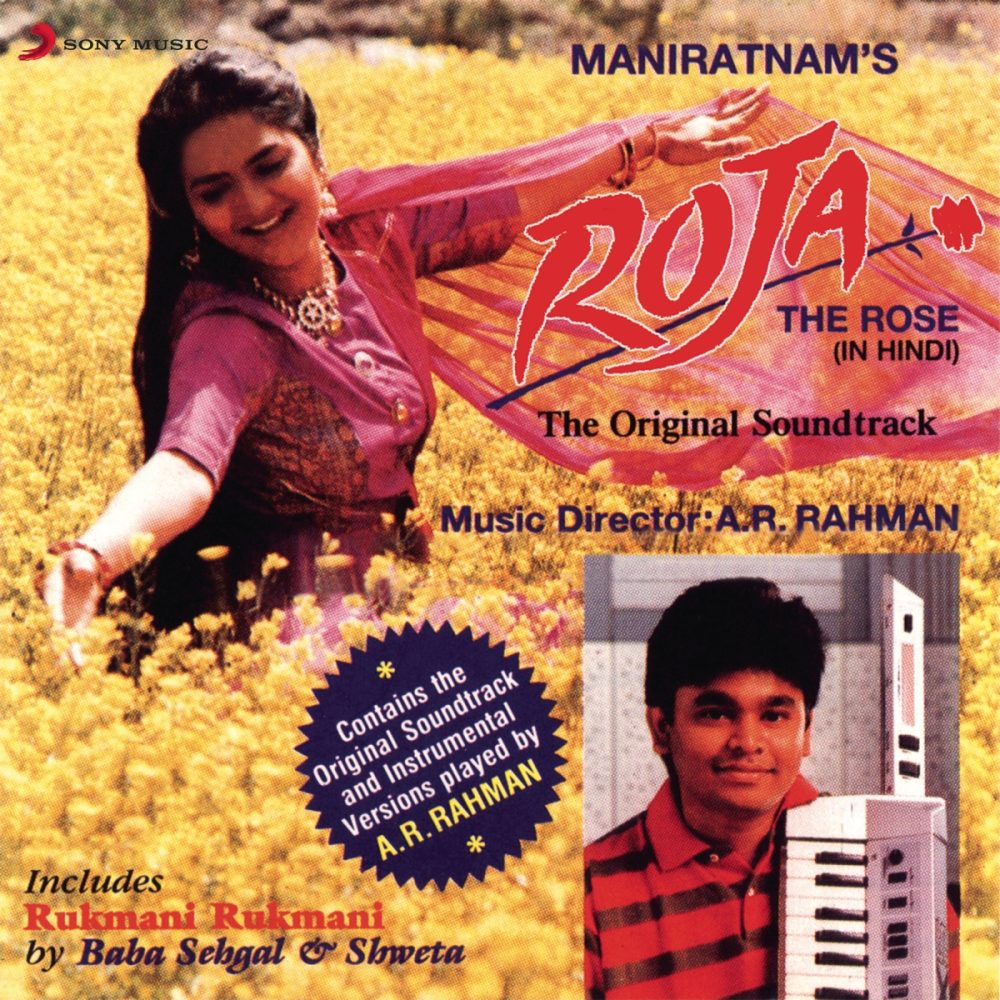
1. Roja (1992)
The debut. Rahman was 25 and working out of a converted garage studio when Mani Ratnam hired him for Roja, and the resulting album rewrote the rules of Indian film music overnight. Chinna Chinna Aasai (Dil Hai Chhota Sa in Hindi) opens with a melody so clean it sounds inevitable. Kadhal Rojave (Roja Jaaneman) is the romantic centrepiece. Tamizha Tamizha (Bharat Humko Jaan Se Pyaara Hai) remains one of the few patriotic songs that people play by choice. And Rukkumani Rukkumani brought a rhythmic, synthesised energy to a wedding song that nobody in Chennai or Bombay had heard before.
 Chinna Chinna Aasai
Roja is number one not because it is the most sophisticated album here but because everything that followed is downstream of it: the layered production, the use of unknown singers, the fusion of Carnatic melody with Western harmony and electronic rhythm. Time magazine later included it among its all-time best soundtracks. It was also, for most of India, the first time a film score sounded like the future.
Honourable Mentions
- Kadal (2013): a difficult film with a gorgeous, underheard album. We wrote about it when it released in our Kadal music review.
- Iruvar (1997): Rahman's most classically rooted score, and one Mani Ratnam fans rate above several entries on this list.
- Vande Mataram (1997): the non-film album, with Maa Tujhe Salaam, that marked fifty years of Indian independence.
- Yuvvraaj (2008): a flop film with the stunning Manmohini Morey, which we covered here.
- Ponniyin Selvan: I (2022): proof that the Ratnam and Rahman partnership still produces at the highest level thirty years in.
Frequently Asked Questions
What is A. R. Rahman's most famous album?
Internationally, Slumdog Millionaire, because of the two Academy Awards and Jai Ho. In India, Roja, Bombay and Dil Se are the albums most people name first, and Rockstar is the favourite of listeners who grew up in the 2010s.
Which A. R. Rahman album should I start with?
Dil Se. It is short, every track is essential, and it shows his full range in six songs. Follow it with Roja for the origin and Rockstar for the modern peak.
How many films has A. R. Rahman scored?
Around 150 feature films since 1992, across at least five languages, plus stage musicals, non-film albums and international collaborations.
Has A. R. Rahman won an Oscar?
Yes, two, both at the 2009 Academy Awards for Slumdog Millionaire: Best Original Score and Best Original Song for Jai Ho.