Jazz has a reputation problem. People assume it is difficult, that you need to understand chord substitutions to enjoy it, or that it all sounds like background music in a hotel bar. None of that is true, but the sheer size of the catalogue makes starting hard. Type "jazz" into a streaming service and you get a century of music with no map.
This is the map. Twelve albums, chosen because each one is both a landmark and genuinely pleasurable on a first listen. They are arranged in a suggested listening order, starting with the most immediately accessible and moving toward records that reward a little familiarity. For each one we note what to listen for, so you are not just hearing it but hearing into it.
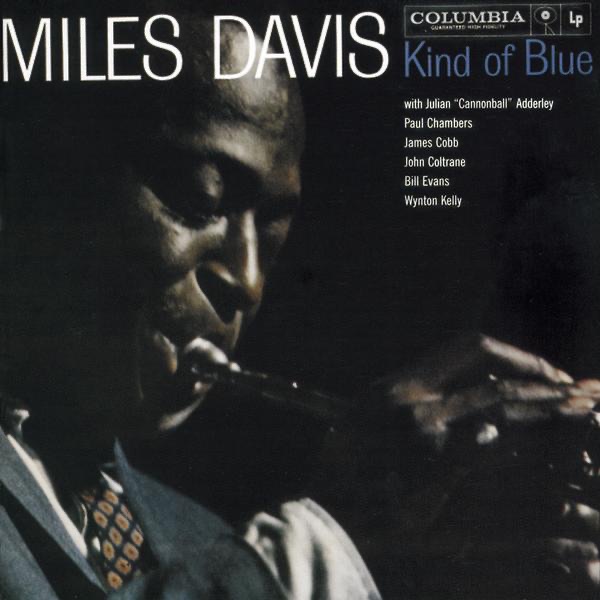
1. Miles Davis, Kind of Blue (1959)
The best-selling jazz album of all time and still the right place to begin. Miles Davis assembled John Coltrane, Cannonball Adderley, Bill Evans, Wynton Kelly, Paul Chambers and Jimmy Cobb, gave them sketches rather than full compositions, and recorded almost everything in first takes. The result is calm, spacious and endlessly replayable.
 So What
What to listen for: on "So What", notice how the soloists improvise over just two chords. This is modal jazz, and the freedom it gives the players is what makes the record feel so unhurried.
2. The Dave Brubeck Quartet, Time Out (1959)
Released the same year as Kind of Blue, Time Out took a different kind of risk: every track is in an unusual time signature. "Take Five" is in 5/4 and became the best-selling jazz single ever. "Blue Rondo à la Turk" is in 9/8. It should sound like a maths exercise. Instead it swings.
 Take Five
What to listen for: count along with "Take Five" (one-two-three, one-two) and then stop counting and notice that your foot kept tapping anyway. Paul Desmond's alto saxophone tone is one of the most beautiful in the music.
3. Ella Fitzgerald and Louis Armstrong, Ella and Louis (1956)
If instrumental jazz feels abstract, start with voices. Ella Fitzgerald, with the most technically perfect voice in jazz, and Louis Armstrong, with the most characterful, sing standards together backed by Oscar Peterson's trio. It is warm, funny and completely without pretension.
 Cheek to Cheek
What to listen for: the contrast. Ella's phrasing is smooth and precise; Louis bends and growls. On "Cheek to Cheek" the two approaches meet in the middle and the song becomes a conversation.
4. Stan Getz and João Gilberto, Getz/Gilberto (1964)
The album that brought bossa nova to the world and introduced "The Girl from Ipanema". Stan Getz's tenor saxophone floats over João Gilberto's whispered guitar and voice, with Antônio Carlos Jobim on piano. It is soft, sophisticated and perfect for a first jazz record because it never demands your attention; it simply earns it.
 The Girl from Ipanema
What to listen for: Gilberto's guitar rhythm. It sounds simple and is fiendishly hard to play. Also, Astrud Gilberto's famous vocal was a last-minute addition; she was not a professional singer.
5. Cannonball Adderley, Somethin' Else (1958)
A Blue Note classic that features Miles Davis as a sideman, which he almost never did. Cannonball Adderley's alto saxophone is joyful and blues-drenched, and the opening track, "Autumn Leaves", is one of the most elegant performances of a standard ever recorded.
 Autumn Leaves
What to listen for: the first two minutes of "Autumn Leaves", where Miles states the melody with his muted trumpet. It is a lesson in doing less.
6. Art Blakey and the Jazz Messengers, Moanin' (1958)
Hard bop at its most infectious. Art Blakey's drumming drives everything, Bobby Timmons's title track is a gospel-tinged earworm, and Lee Morgan's trumpet is cocky and brilliant. This is the album to play for anyone who thinks jazz lacks energy.
 Moanin'
What to listen for: the call-and-response in "Moanin'" between the piano and the horns, and Blakey's press rolls, the thunderous snare drum crescendos he uses to push soloists into their next chorus.
7. John Coltrane, Blue Train (1958)
Coltrane's only album as a leader for Blue Note, and his most approachable. The title track's slow blues riff is instantly memorable, and the whole record has a late-night glow. It is the ideal introduction to a musician whose later work can be demanding.
 Blue Train
What to listen for: Coltrane's solo on "Blue Train". He plays dense, cascading runs that critics called "sheets of sound", but here they are still anchored to the blues, so you can follow every turn.
8. Bill Evans Trio, Waltz for Debby (1961)
Recorded live at the Village Vanguard in New York, with glasses clinking and the occasional cough left in. Bill Evans's piano is lyrical and harmonically rich, and bassist Scott LaFaro plays melodic lines that make the trio sound like a three-way conversation rather than a soloist with accompaniment. LaFaro died in a car accident less than two weeks after this recording.
 Waltz for Debby
What to listen for: the bass. Notice how often LaFaro stops keeping time and starts answering Evans instead. This record changed how every piano trio after it worked.
9. Charles Mingus, Mingus Ah Um (1959)
The third great album from 1959 on this list. Charles Mingus was a bassist, composer and bandleader with an enormous personality, and this record contains his range: "Goodbye Pork Pie Hat" is a tender elegy for Lester Young, "Better Git It in Your Soul" is a gospel revival, and "Fables of Faubus" is a protest song aimed at a segregationist governor.
 Goodbye Pork Pie Hat
What to listen for: the ensemble sound. Mingus wrote for his band like an arranger but let them play like a jam session. The horns slide, shout and overlap.
10. Sonny Rollins, Saxophone Colossus (1956)
Sonny Rollins is the great improviser of the tenor saxophone, and "St. Thomas", the calypso that opens this album, is one of the most joyful things in jazz. The album also contains "Blue 7", a long blues that critics have analysed for decades because of how logically Rollins develops a single idea.
 St. Thomas
What to listen for: thematic improvisation. Rather than running scales, Rollins takes a small fragment of the melody and turns it over, inverts it, stretches it. You can hear him thinking.
11. Herbie Hancock, Head Hunters (1973)
A leap forward in time and style. Herbie Hancock, who had played piano with Miles Davis in the 1960s, plugged in and made a funk record with jazz harmony. "Chameleon" runs for fifteen minutes on one of the most sampled bass lines in music, and "Watermelon Man" reinvents his own earlier hit with a bottle-blown intro. It became the first jazz album to go platinum.
 Chameleon
What to listen for: the groove. Head Hunters is jazz you can dance to, and the hip-hop producers who sampled it understood that. Listen for the synthesiser solo on "Chameleon" and how it sits in the pocket.
12. John Coltrane, A Love Supreme (1965)
The last album on the list because it asks the most of you and gives the most back. A Love Supreme is a four-part suite that Coltrane wrote as a prayer of gratitude, performed by his classic quartet with McCoy Tyner, Jimmy Garrison and Elvin Jones. It is intense, spiritual and, by the final movement, almost overwhelming.
 A Love Supreme, Part 1: Acknowledgement
What to listen for: the chant. In "Acknowledgement", Coltrane plays the four-note bass motif in every key before the band chants the words "a love supreme" over it. Once you have heard the earlier albums, this record makes sense as a destination.
Where to Go Next
If the 1950s records won you over, explore Thelonious Monk's Brilliant Corners, Horace Silver's Song for My Father and Wayne Shorter's Speak No Evil. If Head Hunters was your favourite, try Miles Davis's Bitches Brew and Weather Report's Heavy Weather. If you want to hear where jazz is now, Kamasi Washington's The Epic (2015), Robert Glasper's Black Radio (2012) and Nubya Garcia's Source (2020) are the modern records that most often convert new listeners.
For solo piano in a jazz-adjacent mode, Keith Jarrett's The Köln Concert (1975) is a fully improvised live recording that sold millions and remains a gateway for listeners coming from classical or ambient music. Readers who enjoy that side of things may also like our pieces on Ludovico Einaudi and Ólafur Arnalds, and you can find all of our jazz coverage in the Jazz section.
Frequently Asked Questions
What is the best jazz album for a complete beginner?
Kind of Blue by Miles Davis. It is calm, melodic and short enough to hear in one sitting, and it features several of the most important musicians in the genre on one record.
Why are so many classic jazz albums from 1959?
1959 saw the release of Kind of Blue, Time Out, Mingus Ah Um and Ornette Coleman's The Shape of Jazz to Come. It was a moment when bebop's vocabulary was fully mature and musicians were pushing in several new directions at once.
Should I listen to jazz on vinyl?
Not necessarily. Most of these albums have excellent remastered digital editions. Vinyl is a pleasant way to listen to a full album without skipping, which does help with jazz, but the format itself is not the point.
Is it better to start with vocal jazz or instrumental?
If you find instrumental music hard to focus on, start with Ella and Louis or Getz/Gilberto, both of which have vocals. Otherwise Kind of Blue is the stronger introduction to how jazz improvisation works.