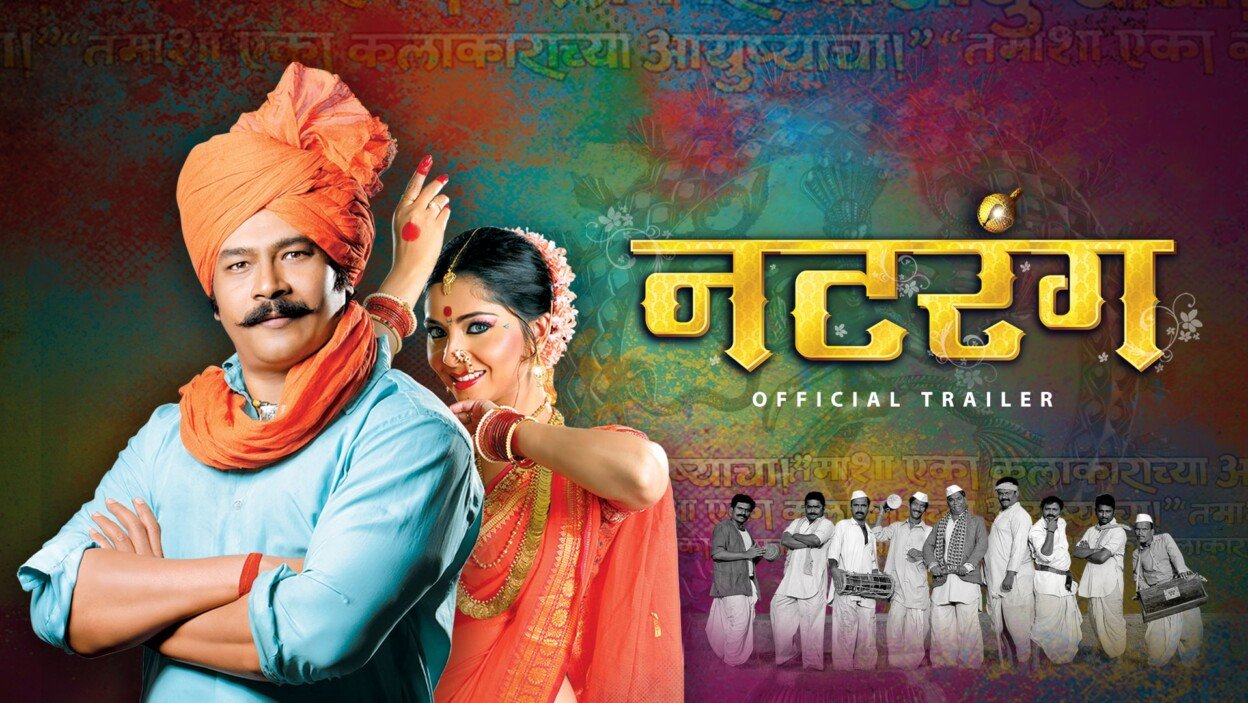
Before the late-2000s wave, Marathi cinema was always alive in storytelling and performances, but it didn’t always have that “one album everyone remembers” kind of pop-culture moment. And then Natarang arrived (2009) and changed the vibe completely.
This wasn’t just a hit soundtrack. It felt like a statement: Marathi films can be rooted, authentic, and still feel massive.
Folk, but not “cosmetic” folk
Since the film is set in the world of Tamasha (a traditional Maharashtrian folk theatre form with music, dance, and Lavani-style performance), the music needed to feel real – not folk used as decoration.
That’s where Ajay–Atul nailed it. With Guru Thakur’s lyrics, the album leans heavily into Lavani and Gavalan, but it never feels forced or modernized for effect. Instead, folk becomes the core engine – rhythm cycles, and stage-like intensity – just elevated with proper cinematic scale.
A soundtrack that feels like live performance
One thing Natarang gets perfect is how performance-first the music feels. The percussion isn’t just background – it carries the emotion and the world of the film. You can literally feel the Tamasha ecosystem in the sound: the energy, the drama, the raw theatre of it all.
That’s also why the album’s sound identity still feels so alive years later.
Apsara Aali = craft + mass appeal
If you want one song that explains why this album became iconic, it’s “Apsara Aali.”
It’s built on a simple, danceable rhythmic base, but it’s layered with enough complexity that it stays addictive even after repeat listens.
And with Bela Shende’s voice driving it, the track becomes pure cultural memory.
“Khel Mandala” is the emotional spine
While most people talk about the Lavani hits, “Khel Mandala” is what gives the album its soul. Sung by Ajay Gogavale, it’s not flashy – it’s honest and heavy in the best way.
It proves Natarang wasn’t just about stage energy. It had depth.
And that mass + meaning balance is exactly what later Marathi soundtracks kept trying to achieve.
An album that feels like a world
Natarang doesn’t feel like a random collection of songs. The tracklist flows like it belongs to one universe – moving between full-performance numbers and emotional storytelling.
You don’t just remember one track. You remember the entire world the music creates.
Why Natarang still carries so much depth:
Because it didn’t treat Marathi folk as something to preserve behind glass. It treated it like living pop culture – performable, powerful, and proudly mainstream.
Ajay–Atul + Guru Thakur didn’t just make an album for a film. They made a soundtrack that became a reference point for Marathi cinema itself.
Rooted, loud, emotional, and unforgettable.